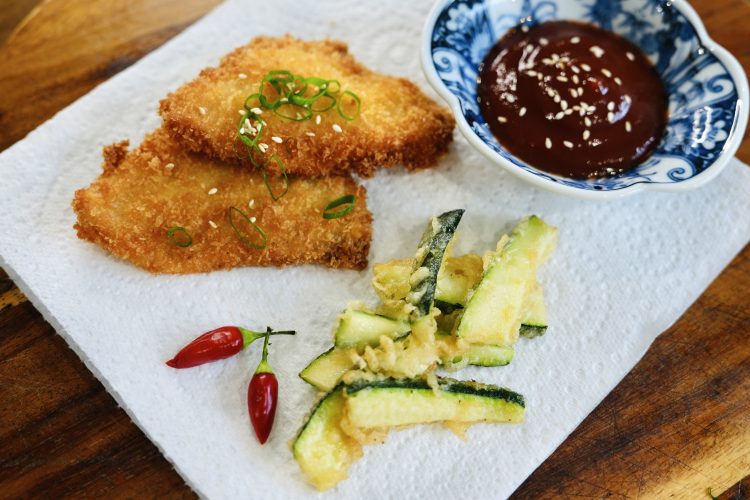
On this page, you will learn the key differences between tempura and breaded frying. Using both methods, we prepared Tempura Zucchini and Chicken Katsu. You can watch the full recipes for these dishes here.
Tempura is a Japanese frying technique that produces a light, crispy, and delicate coating. The key to perfect tempura lies in batter consistency, oil temperature, and quick frying.
- Batter: Usually made with cold water and flour, sometimes with a touch of egg. Keep it cold and slightly lumpy, over-mixing activates gluten and makes it heavy.
- Oil temperature: Maintain around 170–180°C (340–360°F). If the oil is too hot, the outside will burn before the inside cooks; too low, and the batter absorbs too much oil.
- Frying: Coat vegetables, seafood, or other ingredients lightly in batter and fry quickly in small batches. Drain excess oil on a wire rack or paper towel.
- Serving: Tempura is best eaten immediately to preserve crispiness, often served with a dipping sauce such as tentsuyu (soy-based) or simple salt.
Katsu frying, also common in Japanese cuisine, uses panko breadcrumbs to create a thicker, crunchy coating for meat, seafood, or vegetables. It differs from tempura in that it produces a hearty, golden crust rather than a light, airy shell.
- Breading process: Use a standard three-step dredge: flour, beaten egg, and panko breadcrumbs. Press the panko lightly onto the surface to ensure even coating.
- Panko breadcrumbs: Japanese-style panko is coarser and flakier than regular breadcrumbs, creating a crispier and lighter crust.
- Oil temperature: Fry in oil heated to 170–180°C (340–360°F). Cook in small batches to avoid lowering the oil temperature.
- Frying technique: Fully submerge the coated ingredient and turn once for even browning. Drain on a wire rack or paper towel.
- Serving: Katsu is often sliced and served with tonkatsu sauce or alongside rice and cabbage.
The difference between these two Japanese frying methods—tempura and breaded frying—lies in the coating, texture, and overall lightness of the finished dish.
If you enjoy crispy dishes, you should try Hasselback Potatoes. They require no coating, just patience and high-quality potatoes!
Watch the recipes in action on the FırınForno YouTube channel and follow FırınForno on Instagram for daily posts!

Tempura and Breaded Frying
Course: AppetizersCuisine: JapaneseDifficulty: Easy30
minutes20
minutesIngredients
- Tempura Batter (for the Tempura Frying)
120 g flour (sifted)
1 tsp baking soda
2 tsp potato starch
1 egg
240 g ice water
- Panko Breading (for the Breaded Frying)
150 g flour
2 eggs
150 g panko crumbs
Directions
- Tempura Batter (for the Tempura Frying Technique)
- In a mixing bowl, combine all liquid ingredients except the flour.
- Sift the flour into the bowl to ensure even distribution and to prevent clumping. Use all-purpose or low-protein flour for a light texture; high-gluten flour may result in a heavier, chewier batter.
- Gently fold the flour into the liquid until just combined. Do not over-mix; small lumps are desirable to maintain a delicate, airy texture.
- To control temperature and prevent gluten overdevelopment, place the bowl over an ice bath. Keep the batter cold throughout the frying process. Cold batter slows gluten formation, resulting in a crisp, tender coating.
- Panko Breading (for the Breaded Frying Technique)
- Lightly dust the item with all-purpose flour. This creates a dry surface that helps the egg adhere evenly.
- Dip the floured item into a bowl of beaten eggs, ensuring it is fully coated. Shake off any excess egg.
- Press the item into a plate of panko breadcrumbs, coating all sides evenly. Apply gentle pressure to ensure the breadcrumbs stick without compacting them, preserving a light, crispy texture when fried.
Recipe Video
Watch the recipes in action on the FırınForno YouTube channel and follow FırınForno on Instagram for daily posts!