
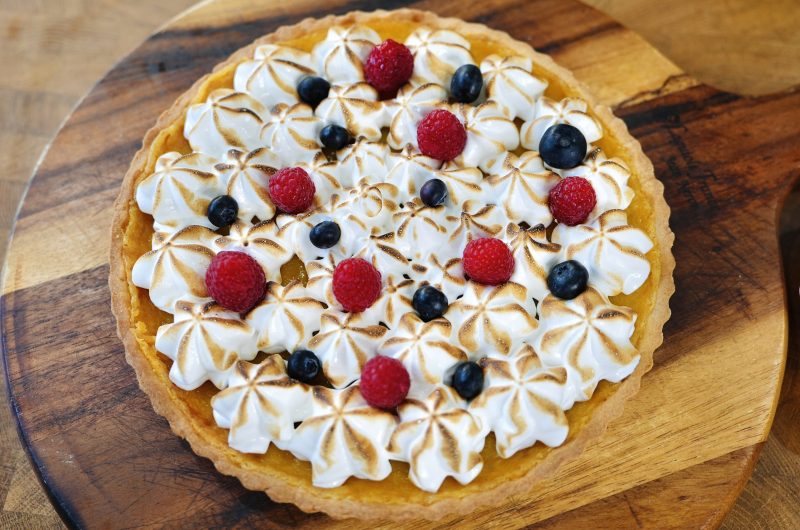
The Lemon Meringue Tart is a timeless dessert loved for its perfect balance of flavors and textures. A crisp pâte sablée tart crust forms the base, providing buttery, delicate structure. Tangy lemon curd adds bright citrus flavor, while light, glossy Italian meringue crowns the tart with soft peaks and subtle sweetness. Together, these elements create a dessert that looks elegant and tastes irresistible.
This classic tart has roots in European pastry traditions, particularly French and British patisserie. Home cooks and professional chefs alike celebrate it for its combination of crisp pastry, smooth curd, and airy meringue. Fresh lemons give the curd a vibrant flavor, while properly prepared meringue ensures stability and shine. Resting the tart crust before baking prevents shrinkage, and chilling the lemon curd enhances the texture and taste.
You can serve Lemon Meringue Tart chilled or at room temperature for afternoon tea, festive gatherings, or as a show-stopping dessert centerpiece. For a modern twist, try individual tartlets or add a layer of fruit puree under the curd. Italian meringue can be lightly torched for caramelized flavor or piped for decorative designs. This dessert proves that simple ingredients, egg, butter, sugar, and lemon, can create a refined tart at home.
If you enjoy tarts, do not forget to check out the other delicious tart recipes Chocolate and Raspberry Tart and Chocolate and Pistachio Tart on the website!
| Watch the recipes in action on the FirinForno YouTube channel and follow FirinForno on Instagram for daily posts!
Lemon Meringue Tart
Course: DessertCuisine: FrenchDifficulty: Medium6
servings45
minutes25
minutes819
kcalIngredients
- Shortcrust Pastry (Pâte Sablé Tart Crust)
200 g plain flour
120 g unsalted butter
25 g egg
65 g icing sugar
Pinch of salt
25 g ground almond
- Lemon Curd
200 g granulated sugar
2 tsp lemon zest
180 ml lemon juice
2 large whole eggs (100g)
4 large egg yolks (80g)
110 g unsalted butter (at room temperature)
- Italian Meringue
200 g sugar
125 ml water
4 large egg white
1/2 tsp cream of tartar or lemon juice from 1 lemon (optional)
Directions
- Shortcrust Pastry (Pâte Sablé Tart Crust)
- Mix the flour, icing sugar, almond meal and salt, then use your fingers to rub the butter in until it resembles breadcrumbs
- The mixture should be a bit like wet sand that can run through your fingers
- Add egg and mix through with a rubber spatula until the mixture stiffens to the point you can’t really mix any more
- Now turn the dough out onto a work surface and use your hands to bring it together into a dough. You don’t need to knead it, just bring it together into a smooth ball
- Shape the dough into a ball then pat it down, wrap with cling wrap, and refrigerate for 30 minutes or even overnight.
- Remove the dough from the fridge and unwrap. Note: If you refrigerated overnight or much longer than 30 minutes and the pastry is rock solid, leave it out for a bit until it softens enough that it can be rolled out
- Place the dough on a lightly-floured work surface, then sprinkle the dough surface lightly with flour
- Roll out into a 32cm, 3mm thick.
- To transfer the pastry into the tart tin, roll the pastry onto the rolling pin, taking care not to stretch the pastry. Stretching the pastry causes shrinkage when it bakes.
- Use your fingers to drape it in and gently coax it into the corners to fill the tart tin, as opposed to pulling or stretching it.
- Drape the excess pastry outside the rim of the tart tin, then roll the rolling pin across the surface to cut the excess off and remove excess pastry (but keep it, in case there’s a patching-up emergency to tend to later!)
- Prick the base with a fork. This allows steam to escape which stops the base from puffing up, so you have a nice smooth and not a bubbled base.
- Refrigerate for 30 minutes.
- Prepare blind baking – Cover the pastry with 2 large sheets of baking / parchment paper, then fill with baking beads (or beans) to weigh it down. The purpose of these weights is to prevent the base from puffing up and the sides from collapsing inwards during this blind baking stage.
- Bake at 180°C for 15 minutes.
- Then remove the weights, fill with lemon curd, then bake for a further 5-7 minutes.
- Lemon Curd
- Place a fine-mesh strainer over a medium-sized bowl and set it near the stove.
- In a small bowl, combine the sugar with the lemon zest. Use your fingers to rub the zest into the sugar until fragrant.
- Juice the lemons and set aside.
- In a medium saucepan, whisk together the whole eggs, egg yolks, and the lemon-scented sugar until smooth and well combined.
- Stir in the lemon juice and a pinch of salt.
- Place the saucepan over medium heat and cook the mixture, whisking constantly, until it thickens and reaches 85°C.
- Remove from the heat and immediately stir in the butter until fully incorporated.
- Pour the curd through the prepared strainer into the bowl, pressing gently with a spatula to remove any solids.
- Cover the surface of the curd with plastic wrap, pressing it directly onto the surface to prevent a skin from forming.
- Refrigerate until fully chilled and set before using in your lemon meringue tart.
- Italian Meringue
- Separate the egg whites into a clean, dry mixing bowl. Ensure no yolk is present.
- Begin whisking the egg whites on medium speed until they reach soft peaks.
- In a small saucepan, combine the sugar and water.
- Heat over medium heat until the syrup reaches 116–120°C (soft ball stage), checking with a thermometer.
- With the mixer running on medium-high speed, slowly pour the hot sugar syrup in a thin stream into the whipped egg whites (Avoid pouring directly onto the whisk to prevent splattering).
- Continue whisking the mixture while it cools to room temperature.
- The meringue should become thick, glossy, and hold stiff peaks when the whisk is lifted (Do not over-whip, over-whipping can collapse the foam).
- When the tart is cooled down, pipe the meringue on top and use a kitchen torch to caramelize the surface. Hold the torch a few centimeters away from the meringue and move it in slow, sweeping motions to evenly toast the peaks. This creates a golden-brown, slightly crisp exterior while keeping the interior soft and fluffy (You can watch how it is done from Lemon Meringue Tart).
Recipe Video
Notes
- Avoid fats and water: Any fat or moisture on tools or bowls will prevent proper foaming.
Room temperature eggs: Eggs at ~21°C whip more easily and evenly.
Do not over-whip: Over-whipping can collapse the foam; maintain medium-high speed for control.
Sugar ratio: A 2:1 sugar-to-egg white ratio enhances stability.
Add an acid: Lemon juice, cream of tartar, or vinegar improves flexibility and reduces collapse risk.
Use fresh eggs: Fresh eggs create a more stable structure than older eggs. - Do not over-knead the tart dough, just press the dough together with your hands until combined.
- If your tart dough breaks while lining the mold, don’t worry. You can use any excess dough to patch or press over the gaps. Simply press the extra pieces gently into place, smoothing the edges so the crust stays even. This ensures a clean, stable base for the lemon curd and meringue, without compromising texture or baking results.
Watch the recipes in action on the FirinForno YouTube channel and follow FirinForno on Instagram for daily posts!